


ABOUT COLOMBIA
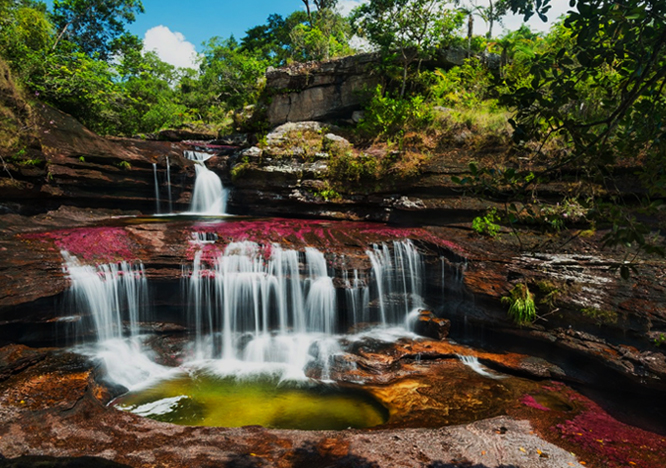
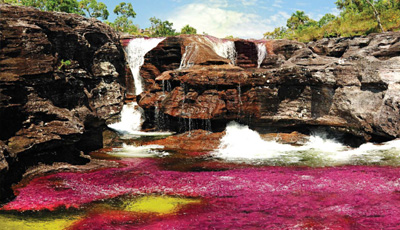
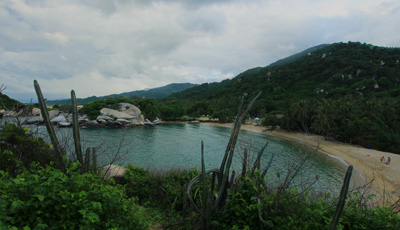
Colombia is an incredibly privileged country, which you must know, it is a geographically magical place with a great wealth of its territory. Located between the Tropic of Cancer and the Tropic of Capricorn, on the equatorial line. It is reached in waters, sweet because of the rivers and the mountains and salty because the Atlantic and Pacific Ocean showered it.
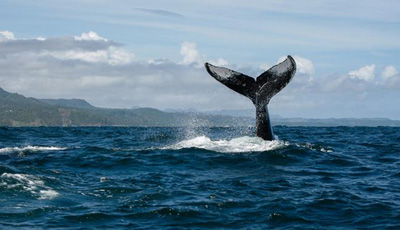
Also, in Colombia, we have the largest jungles in the world, El Tapón del Darién, and the Amazon Rainforest, which are ideal for a wide variety of animals and plants, of which many are endemic. In Colombia besides the Andes Mountain Range, the most spectacular and important mountain chain in South America.
You can find great treasures of humanity, archaeological finds with more than 19,000 years old, dating from the history of pre-Columbian cultures. In the Serrania del Chiribiquete was discovered ancient cave art earlier than those of the Altamira caverns in Spain, completely changing what we took for granted as the history of humanity.
ABOUT COLOMBIA….
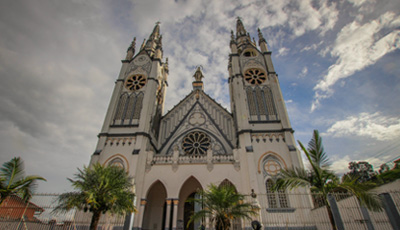
Colombia is considered a diverse country given its culture, geography, and rich history making it a unique and genuine travel destination. Traveling there can be an experience like straight out of a novel where you will be captivated and dazzled by the contrast of its colonial architecture and modern cities, the richness of its native communities, the incredible natural biodiversity, the traditional fairs and festivals that display the traditions and not to mention the exquisite and peculiar cuisine from its different regions. If you are looking to fall in love with a country where every day is a magical experience, the answer is Colombia.
Our country has an immense biological wealth and protected areas are strategic for its conservation. The following data will surprise you!
Colombia has 56,343 species, although this figure is only the great measure that our country has and is constantly updated.
We are the second most biodiverse country in the world, after Brazil.
We are the second most biodiverse country in species of plants, amphibians, butterflies and freshwater fish of the world.
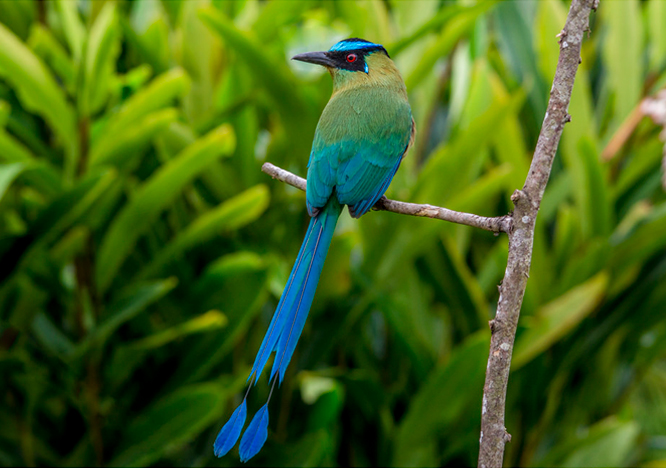
We are the first country most biodiverse in species of birds and orchids of the world.
We are the third most biodiverse country in palms and reptiles of the world.
We are the fourth most biodiverse country in mammals of the world
HISTORY
While Christopher Columbus retains the honour of being Colombia’s namesake, a little investigative sniffing proves that he never actually set foot in the country.It was actually his travelling companion, Alonso de Ojeda, who holds the distinction as the first European to set foot on the land in 1499.
After taking a look around he was decidedly impressed by the wealth of the local Indians and returned with stories of incredible treasure, giving birth to a great myth that glorified the land as a place littered with gold and emeralds.
Unsurprisingly, this was the siren song for the Spaniards and they quickly made their way over (forming many short-term settlements along the coast) and into the interior, resulting in rapid colonization along the way. By 1533, Cartagena had been founded by Pedro de Heredia—creating a principal centre of trade.
Today, on a visit to modern day Cartagena you will immediately be struck by its familiar feel, as it’s reminiscent of other popular colonial outposts—Havana and New Orleans quickly come to mind. All share similar architecture, climate and geography: detailed colonial homes, protruding palm trees, access to water.
After Cartagena, the journey inward officially commenced. Numerous expeditions delivered the Spaniards deep into the interior onto Muisca territory where two clans existed (and were divided), a situation that the Spaniards were happy to exploit to their benefit.
The southern clan was ruled by the Zipa from Bacatá (now Bogotá), and the northern fraction under the Zaque in Hunza (present-day Tunja). Suffice to say, the Spaniards were able to defeat the locals by taking advantage of their infighting and in 1538 Santa Fe de Bogotá was founded on the site of Bacatá. Following this, much more of the colony was conquered and by 1550 Carlos V, king of Spain and Holy Roman Emperor, had established a court of justice in Bogotá.
As the colony developed under Spanish rule, the usual changes were made. Spanish invaders began to bring in slaves from Africa to serve as the workforce, setting up Cartagena as the exclusive slave-trading port. Thus the local population, originally consisting mainly of indigenous communities (and the Spanish invaders) began to diversify and mix, creating a new and emerging demographic, and, yet, power only existed for the Spaniards.
Independence from Spain wasn’t a quick win. Prefaced and created by the colonial situation, inhabitants became extremely unhappy and by 1781 were making that known. Slavery, unfair taxes and duties prompted rebellion and brought about the rise of Simón Bolívar, who by 1812 had became the face (and hero!) of the Independence struggle.
After some failures and then numerous victories, Bolivar was finally able to claim victory for Colombia when it won independence on August 7, 1819.
LANGUAGE
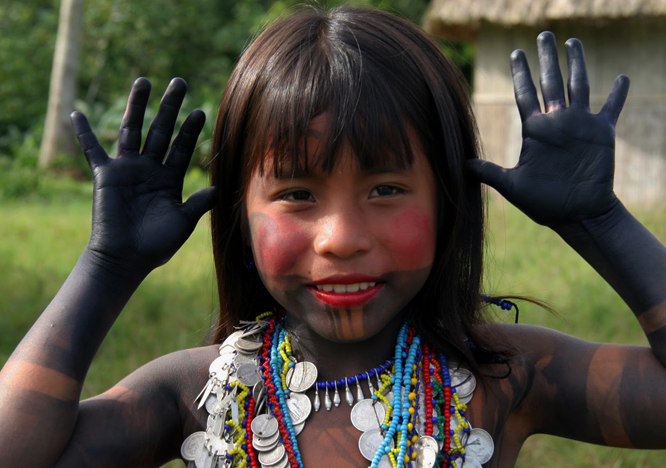
Many languages are spoken in Colombia, among which Spanish is the majority language. More than sixty indigenous and Creole languages are spoken in local and regional spheres, and their specific number is under discussion since some authors consider as different languages what others consider to be varieties or dialects of the same language. The best estimates count 66 indigenous languages, isolated or grouped in more than 20 families or phylogenetic units, spoken by about half a million indigenous.1 According to Ethnologue, in Colombia, there are a hundred languages or languages, of which 80 they are living languages and 20 are extinct.
WEATHER
Colombia is considered a country with a tropical climate 365 days a year without seasons, only experiencing dry and rainy seasons throughout different regions. Differences in altitude between cities may also cause for climates to change dramatically across the different regions. The country’s coastal areas are not a ected by the hurricane season due to their privileged geographical location.
GEOGRAPHY
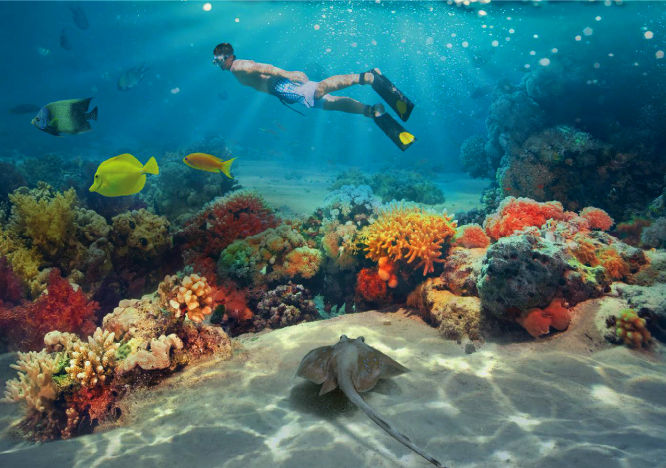
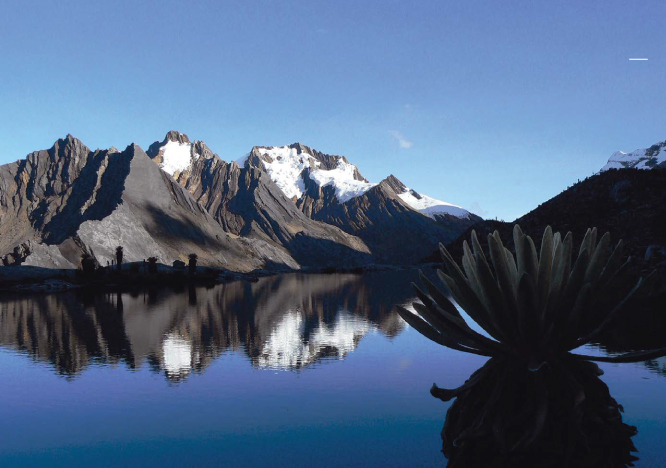
Colombia has a privileged geographical position in the northwestern corner of South America, bordered by the Caribbean Sea on the north side and the Pacific Ocean on the west side. Colombia has a wide range of climates and topography making it one of the most biodiverse countries in the world. It shares its borders with Panama, Venezuela, Brazil, Peru, and Ecuador. It also shares its maritime borders with Costa Rica, Nicaragua, Honduras, Jamaica, Dominican Republic and Haiti. The territory is divided into a at region to the east and the Andes Mountains to the west, with three ramifications. Its incomparable beauty is a tribute to its many rivers, snowy peaks, and desert surfaces.
CLIMATE
The climate of Bolivia varies drastically with altitude and from one eco-region to the other, from the tropics in the eastern llanos to a polar climate in the western Andes.
CULTURE
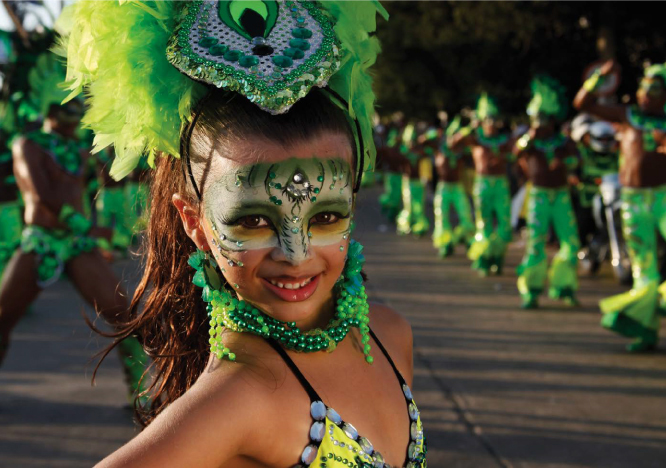
Colombia embraces a past that re ects its glory in every city, town, in its cuisine, fairs and festivals, religion, but especially in its people allure. Proof of this is that Colombia hosts the Ibero- American Theater Festival of Bogota, one of the largest festivals in the world that brings together the best of the performing arts of the five continents. In addition, other events like the Carnival of Blacks and Whites, and the Barranquilla Carnival with the most colorful display of culture and folklore of the Caribbean coast, just to name a few.
Also, our major capital cities have a wide range of museums with noteworthy collections, such as the Gold Museum in Bogota where the biggest display of gold is preserved mounting to nearly 34,000 pieces of gold and 19,600 objects belonging to the pre-Columbian cultures.
Additionally, Colombia is a country where you can learn about traditions and monuments closely linked to the Catholic religion, such as the Santuario de las Lajas in Ipiales, one of the most beautiful sanctuaries in America and what about those places that were the scene of battles and conquests as Cartagena, where the forts and monuments have been declared by the UNESCO as a World Heritage Site?
Colombia is offering travelers the opportunity to interact with multiple cultures inviting you to discover the wonders of this destination.
OUR DESTINATIONS

1 Day


90 USD

10 years.
Half Day (4 hours)
90 USD
18 years.
Full Day (7 hours)
120 USD
12 years.
Full Day (7 hours)
80 USD
10 years.
Full Day (7 hours)
125 USD*
10 years.

8 Days
2000 USD
15 years.
8 Days
1500 USD
12 years.
8 Days
1150 USD
12 years.
7 Days
770 USD
12 years.